





Most landscaping projects take anywhere from 1 day to several weeks, depending on scope; a simple garden bed refresh might wrap up in an afternoon, while an interlock patio or new driveway usually runs 3 to 7 days of active work. Planning, permits, and material delivery can add weeks on top of that.
Fast Facts
- A standard interlock patio installation typically takes 3 to 5 days of on-site work, not counting prep or curing time
- Driveway replacements in Hamilton and Burlington often require 1 to 3 days for removal and installation, plus 24 to 72 hours before the surface can be used
- Retaining wall projects can range from 2 days for a small garden wall to 2 or more weeks for larger structural builds
- Material lead times, especially for custom interlock or natural stone, can add 2 to 6 weeks to a project’s start date
- Spring and early summer are the busiest booking periods for landscaping companies across Hamilton, Stoney Creek, and Oakville, which affects scheduling windows
What Actually Drives a Landscaping Timeline
The question most often asked by homeowners is a simple one: how long will this take? Honestly, the construction itself is usually the shorter part. What takes time is everything around it. Permits, material orders, site assessments, and scheduling all get sorted before a crew ever shows up. In Hamilton and Stoney Creek, spring bookings are often locked in by February or March, sometimes earlier. So if a patio is being planned for June, the conversation needs to start well before that. The actual build might take four days; getting to those four days can take four to six weeks, depending on how the pieces fall into place.
Interlock Patio Timelines: What to Expect
Among the most requested projects for homeowners in Burlington and Ancaster, interlock patios are also among the ones where timelines tend to vary more than expected. A smaller patio, say 200 square feet, can often be finished in 3 to 4 days. Larger or more detailed installations, with borders, steps, or custom patterns, can run 5 to 8 days. The base preparation is what takes the most time, and it’s not something that gets rushed. Excavation, gravel base, compaction, and levelling are all completed before a single paver goes down. Skipping or rushing that stage causes problems later, over time, in ways that aren’t always obvious at first. Most interlock patio contractors in Hamilton won’t cut corners there, and they shouldn’t.
Driveway Replacement: Faster Than You Think, But Not Instant
Once driveway work gets started, it tends to move quickly. Removal of an old asphalt or concrete surface is usually handled in a day. A new surface, whether asphalt, concrete, or interlock, is typically laid within a day or two after that. But there’s a waiting period, I suppose. Asphalt needs time to cure before regular vehicle traffic can be handled, usually 24 to 48 hours at minimum. Concrete takes longer. And if the sub-base needs work, another day gets added before anything goes down. That sounds good on paper, but the full process from demo to usable surface is generally 3 to 5 days when everything is accounted for.
Retaining Walls: The Project That Takes Longer Than It Looks
Retaining walls are often underestimated, and it’s easy to see why. A small decorative garden wall might be built in a day or two. But a structural retaining wall, the kind needed to manage grade changes or prevent soil movement on a sloped property, is a different job entirely. Depending on height, length, and the materials being used, these projects can run anywhere from 3 days to 2 weeks or more. Drainage behind the wall has to be done right. Footings need to be set properly. In some cases, permits are required in Hamilton before any work can begin, which adds time to the front end of the project. Worth asking about early, to be fair.
Seasonal Timing and Why It Matters in Ontario
Ontario’s climate shapes landscaping timelines in ways that aren’t always obvious to homeowners at the planning stage. Ground that’s still frozen or saturated in early spring can delay base work by days or longer. Extreme heat in July can affect how concrete cures. Fall projects, while often possible well into October, are sometimes cut short by early cold snaps. From what we’ve seen across Hamilton, Burlington, and Oakville, the most predictable window for outdoor construction runs from mid-May through September. That’s also the busiest window, so bookings are made early by those who know how quickly the schedule fills. Waiting until the ground thaws to start looking for a contractor usually means waiting another month or two for an available crew, bit by bit.
Larger Yard Projects: When Multiple Scopes Overlap
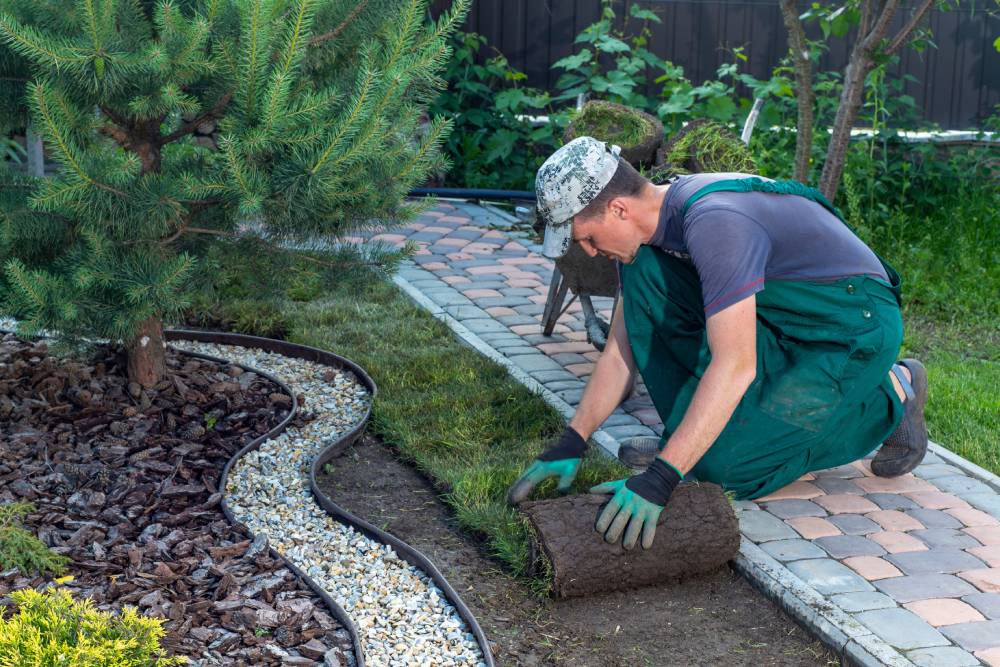
Some homeowners want more than one thing done at once: a new patio, a retaining wall, and fresh sod, all in the same season. That’s doable, but the timeline stacks. Each scope carries its own prep, its own materials, and its own sequence. Sod, for example, shouldn’t be laid until grading is finished and any nearby hardscape work is complete. Trying to rush the sequence usually means something gets redone. A project combining interlock work, a small retaining wall, and lawn restoration in a mid-sized Oakville backyard might run 10 to 14 days of active work, spread across 2 to 3 weeks depending on weather and material delivery. Anyway, that’s usually where it clicks for homeowners that the timeline isn’t just about labour hours.
Permits, Inspections, and Other Timeline Factors
Not every project needs a permit, but some do. In Hamilton, retaining walls above a certain height are typically subject to permit requirements. Driveways that affect drainage or connect to municipal property may also need approval before work is started. Permits take time. Applications are submitted, reviewed, and sometimes revised before approval comes through. That process can add 2 to 4 weeks to a project’s start date, sometimes more. It’s not something most homeowners think about when a finished backyard is being imagined. But it’s a real part of the timeline, and a good contractor will flag it early rather than let it catch you off guard mid-project. Interesting how often that detail gets missed.
Planning Your Project: Where to Start
Starting the conversation early is the best thing that can be done at this stage. A site visit should be booked before the spring rush. Material lead times, permit requirements, and realistic start dates are all worth asking about upfront. A contractor who gives you a clear, honest timeline, including the parts that aren’t glamorous, is one worth trusting. Dream Concepts Landscaping works with homeowners across Hamilton, Stoney Creek, Ancaster, Burlington, and Oakville to plan projects that fit real schedules and real budgets. If you’re trying to figure out what’s realistic for your property this season, the best next step is to visit the website and reach out directly.
Mini-FAQ
Q: Why does my neighbour’s patio seem to go up faster than mine? Fair point, and it comes up more than you’d think. Smaller yards, simpler patterns, and pre-graded surfaces all speed things up. If your yard has drainage issues, uneven ground, or existing concrete that needs to come out first, that adds time.
Q: Does the time of year affect how long a landscaping project takes? It does, in a few ways. Spring bookings fill up fast across Hamilton and the surrounding area, so your actual start date might be weeks after you sign a contract. Cold snaps in early spring can also delay base compaction work, since frozen or saturated ground doesn’t compact properly.
Q: How much of the timeline is actual construction versus prep and cleanup? The visible work is usually the shorter part. Site prep, including grading, excavation, and base layer installation, is often what takes the most time on larger jobs. Cleanup and final grading are typically done in a day or less. But the base work? That’s where the timeline lives.
Q: Can a landscaping project be done in phases to fit my schedule or budget? Yes, and it’s done more often than people expect. A driveway can be completed one season, a backyard patio the next. Phased projects are planned carefully so each stage doesn’t create problems for the one that follows. Worth discussing upfront with your contractor.