




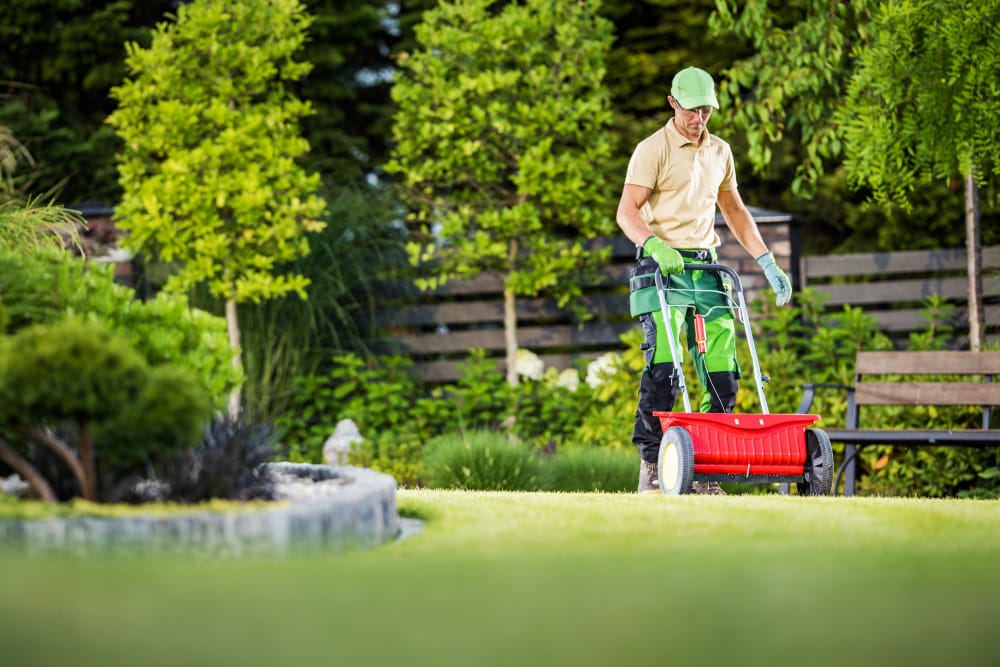
Essential lawn care services for regular maintenance usually include weekly mowing, fertilization, weed control, and seasonal aeration; spring cleanup, fall leaf removal, and targeted pest management throughout the growing season are also beneficial for most homeowners.
Fast Facts:
- Fertilization is needed 3-4 times per year for optimal lawn health
- Proper grass height is maintained through weekly mowing during peak growing season
- Annual aeration should be done for compacted soils
- Preventive application in early spring makes weed control most effective
- Disease is prevented and grass is prepared for winter dormancy through fall cleanup
Understanding Core Lawn Maintenance Services
The foundation of any good lawn care routine is formed by mowing. Proper mowing means more than just cutting grass short, though. Grass is typically maintained at the right height for your specific grass type by professional services, usually around 2.5 to 3 inches for most Ontario lawns. Cutting patterns are also varied by them to prevent soil compaction and ensure even growth. Their previous service always cut the same direction, which created visible tracks and uneven wear patterns; a homeowner in Ancaster recently told us.
Fertilization Programs That Actually Work
Consistent nutrition is needed by your lawn throughout the growing season. Spring startup fertilizer, summer feeding, and fall preparation treatments are included in most professional programs. The timing matters more than many people realize; spring applications help grass recover from winter stress, while root strength for the next year is built through fall feeding. Soil conditions in Hamilton and Burlington can vary significantly even within the same neighborhood, so soil is often tested first by good services.
Weed Control and Prevention Strategies
Prevention of weeds is easier than elimination after establishment. Crabgrass and other annual weeds are stopped before they sprout through pre-emergent treatments in early spring. Weeds that are already growing are handled by post-emergent treatments. Applying the right treatment at the right time is the key. Many homeowners try to handle this themselves but end up applying products when they’re less effective.
Aeration and Overseeding Services
Water, air, and nutrients are prevented from reaching grass roots properly by compacted soil. Thousands of small holes that relieve compaction and improve growing conditions are created through core aeration. Aeration is combined with overseeding by many services to thicken thin areas and introduce newer grass varieties. Fall timing works best because grass has time to establish before winter; plus, spring growth is typically stronger after fall aeration. Makes sense, really.
Seasonal Cleanup and Maintenance
Winter debris is removed and lawns are prepared for the growing season through spring cleanup. Leaves are prevented from smothering grass, and disease problems are reduced through fall cleanup. Trimming around beds, removing debris, and light pruning of shrubs near lawn areas are usually included in both services. Their previous service skipped spring cleanup, and more bare spots were noticed where leaves had been left over winter, a Burlington homeowner mentioned.
Pest and Disease Management
Damage becomes visible before lawn pests are often noticed. Grass roots are fed on underground by grubs, while brown patches that look like drought stress are caused by surface insects like chinch bugs. These issues are caught early when treatment is most effective through professional monitoring. Disease problems are also easier to prevent than cure, especially with Ontario’s variable spring and summer weather patterns.
Choosing the Right Service Combination
A basic package that includes regular mowing, fertilization, and weed control is beneficial for most homeowners. Additional services like aeration, pest control, and cleanup can be added based on specific lawn conditions and budget. Starting with core services and adding others as needed is the best approach. Trying to do everything at once often leads to overspending on services that might not be necessary, from what we’ve seen. If your lawn maintenance is ready to be handled professionally, visit our website to discuss which services make sense for your property.
Mini-FAQ:
Q: How often should I have my lawn mowed? Peak growing months are when weekly mowing works best. Grass stays healthier when it’s cut regularly rather than being allowed to grow too long between cuts. The lawn is kept looking neat that way.
Q – What’s the difference between fertilization and weed control? Nutrients needed for thick, green growth are provided to your grass through fertilization. Unwanted plants that compete with your grass are prevented or eliminated through weed control. These services are typically done separately but can be combined in some treatments.
Q: When should lawn aeration be done? Look, early fall works best for aeration with cool-season grasses common in Ontario. Small holes are created in compacted soil through this process so water and nutrients can reach grass roots more easily. Spring aeration is also possible.
Q – Do I really need professional pest control for my lawn? Fair enough question. Issues with grubs, chinch bugs, or other pests that damage grass from below the surface are developed by many lawns. These problems are caught early through professional pest management. That still surprises people.